Kranzle Obsessed Garage Wash Station (Dual Pressure Washers) - OE-WSMA20
Obsessed Garage Wash Station (Dual Pressure Washer)
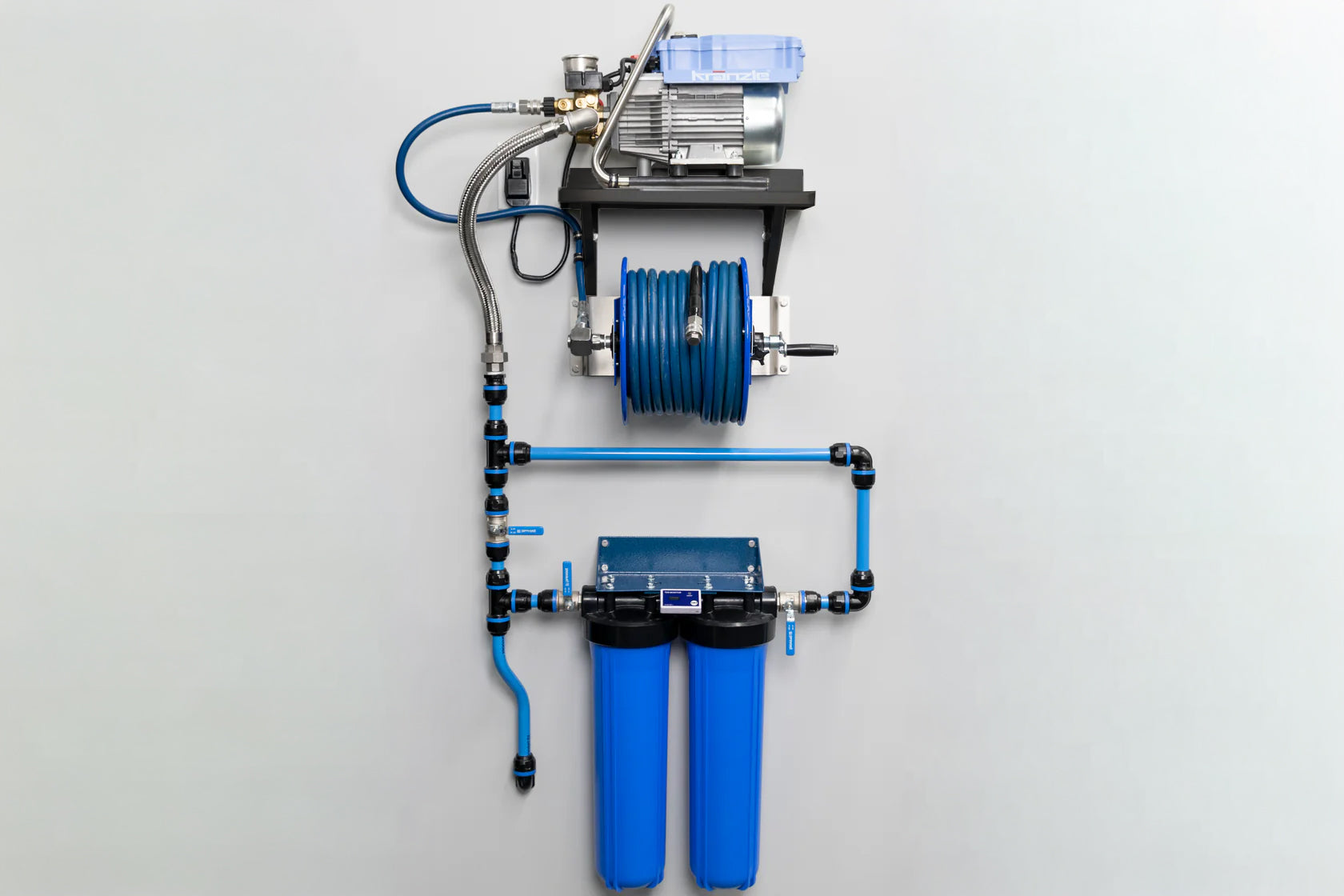
The Obsessed Garage Wash Station Dual is for the person who wants the cleanest, most integrated wash setup we make. It is a self-contained dual pressure washer system that combines water purification, pressure washer integration, hose management, and spot-free rinse capability into one dedicated cabinet layout.
This came from the same years of prototyping and revision as the Single, but pushed further. We kept changing the layout, plumbing, reel position, service access, and machine integration until it stopped feeling like a project and started feeling complete. The goal was to build the setup you end up wanting after you have already tried everything else. For the person building a serious wash bay, this is the end game.
What It Is
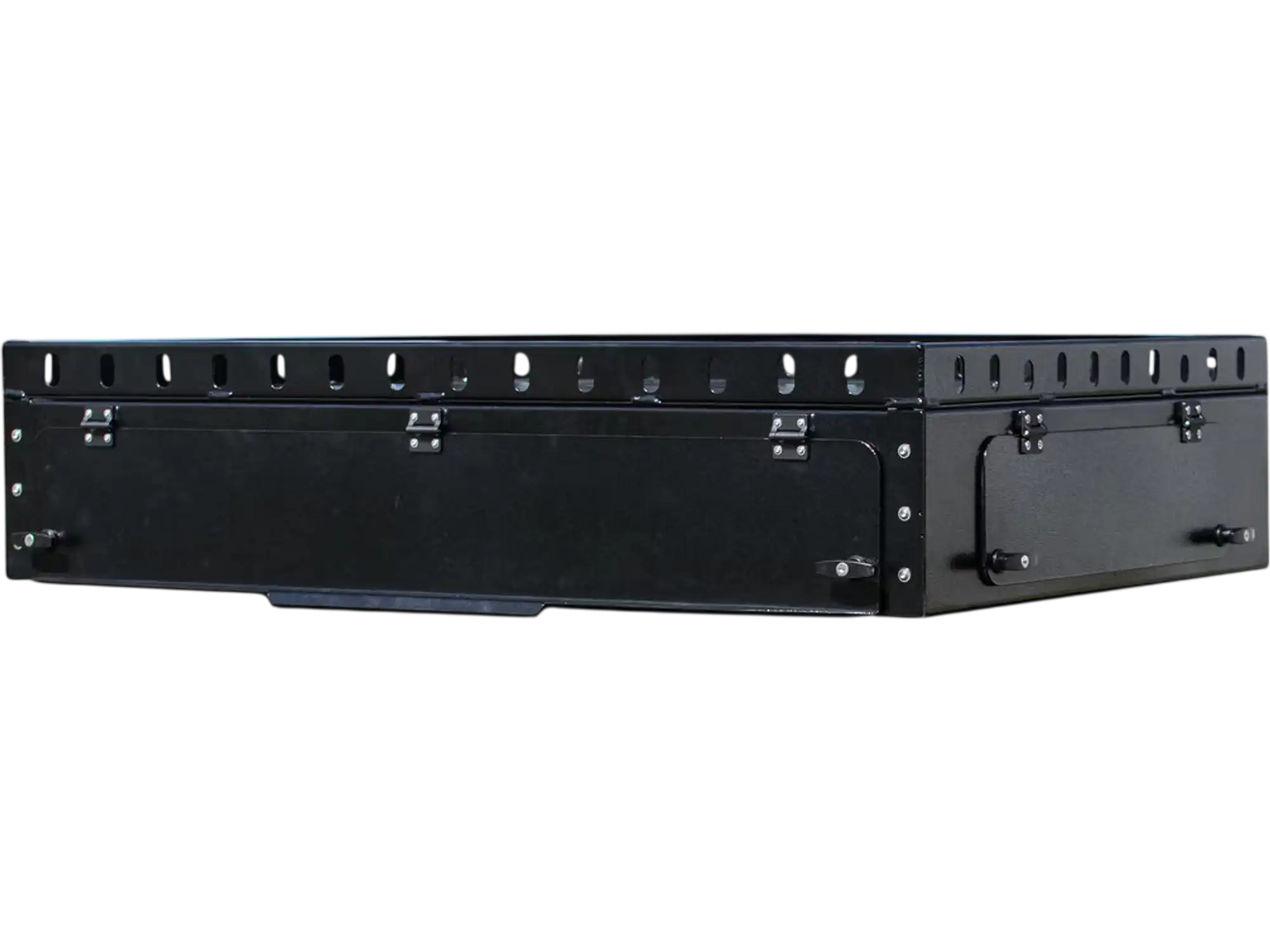
At its core, this is a complete cabinet-based dual wash solution designed in-house. The system combines dual pressure washers, integrated deionized water tanks, a hose reel, and dedicated controls into one clean footprint. The cabinet is built around the same wrinkle black powder coated look inspired by the Sonic MSS Plus style, but the bigger deal is that everything is laid out around how the system is actually used.
The Dual Wash Station is designed as a parallel tank and pressure washer system. Each cabinet receives inlet water and supplies either fresh water or deionized water to its own pressure washer, and the flows are not combined until after the pressure washer outputs. That is what makes the system feel so intentional. It is not two random units sitting next to each other. It is one integrated system.
Each cabinet has its own water quality mode valve, so you can switch between fresh water and De-Ionized (DI) water without changing hoses or dragging tanks around mid-wash. Spot-Free mode sends DI water through the cabinet. Bypass mode sends fresh water through it. That is the right way to use this. Fresh water for your initial rinse and wash steps. DI water for your final rinse.
How It Works
The front-mounted TDS meter on each cabinet shows inlet and outlet water quality in parts per million, so you can monitor what the system is doing instead of guessing. In Spot-Free mode, an outlet reading of 20 PPM or lower is considered ideal for a spot-free finish. On the Dual system, each TDS meter reads the output of the cabinet it is connected to, while the final pressure washer output is a combination of the water from both cabinets.
The resin setup is serviceable, which is a big deal on something like this. Each cabinet uses a removable, refillable media cartridge inside the tank, so the resin can be changed without turning the system into a giant hassle to own. The cartridge is removed from the top and refilled as needed, and the documentation calls out a capacity of up to one-half cubic foot of resin per cartridge, with some space left at the top for proper performance.
That serviceability matters even more on the Dual because you are dealing with two tanks. The Dual version comes with resin. So you have a real starting point without immediately needing to source consumables.
The Dual also adds high-pressure valve control on the back panel, which gives you three output modes. You can run both pressure washers together in Combined Mode for maximum flow, or isolate the system to Left-Only or Right-Only operation. That gives you more flexibility and makes the Dual feel like a real system instead of just a bigger version of the Single.
Built as a Complete System
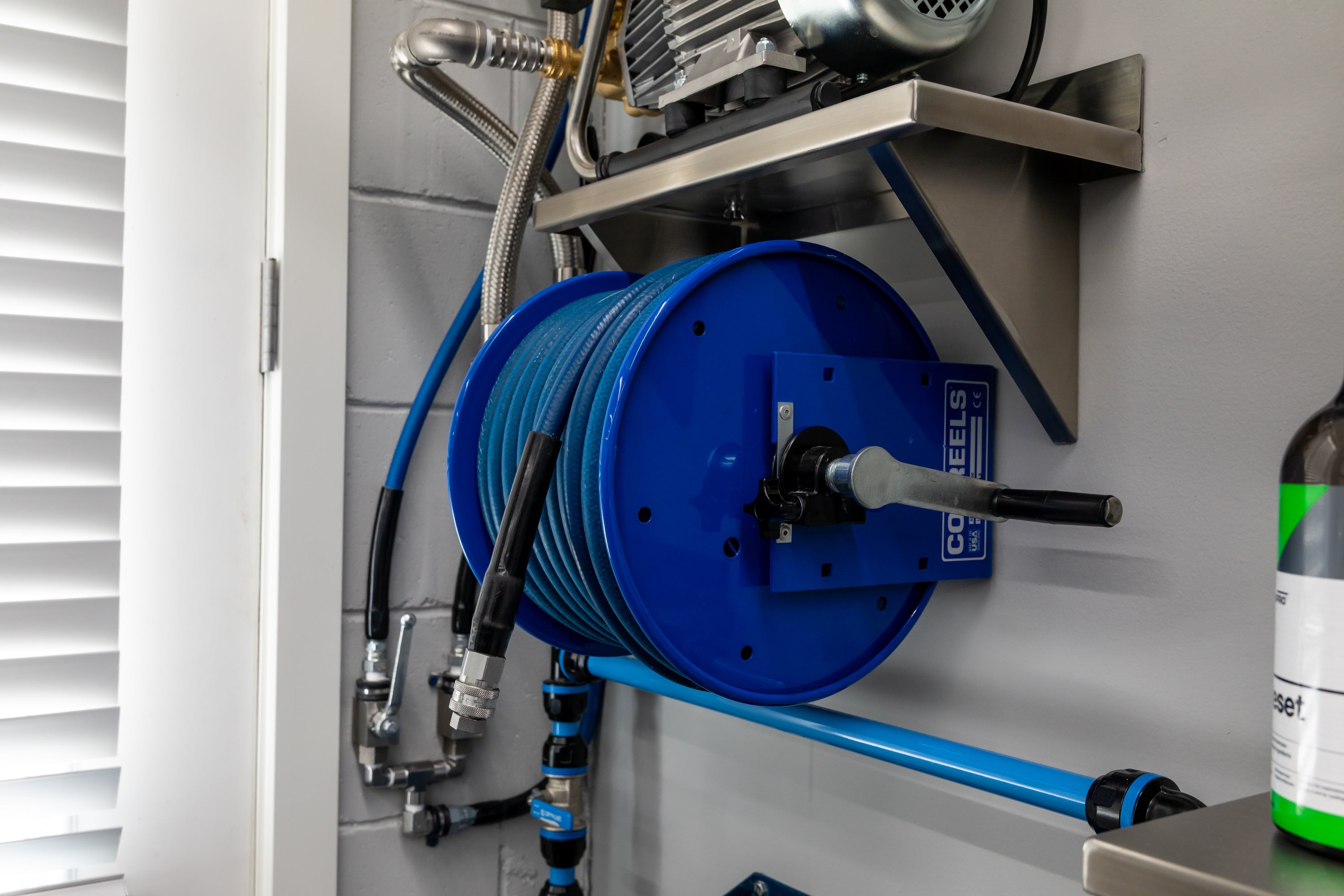
The upper section of the wash station is built around the pressure washer shelves, the plumbing path, and the hose management system. The pivoting hose reel is still one of the best details in the whole setup. When closed, it sits parallel to the wall and keeps the station tidy. When opened, it swings out 90 degrees so you can pull hose at an angle without snagging, then lock it back in place when you are done. That sounds small, but it is exactly the kind of usability detail that changes how the system feels every time you wash.
Who This Is For
This is for the person building a true dream wash bay. You want more flow, more capability, cleaner hose management, and a setup that looks like it belongs in a serious garage. You care about spot-free rinsing, you want the flexibility of combined or isolated washer operation, and you want a system that feels engineered instead of improvised. If the Single is the right answer for most people, the Dual is for the person who wants the no-compromise version.
Not ready for a Dual Setup? Check out the
What Our Experts Think
-
Integrated Dual Pressure Washer System: The Kranzle Obsessed Garage Wash Station OE-WSMA20 combines dual pressure washers, water purification, dedicated controls, and hose management into one integrated cabinet-based washing solution.
-
Advanced Parallel Water System: Each cabinet independently supplies fresh or deionized water to its respective pressure washer, with water flows combined after the pressure washer outputs.
-
Convenient Dual Water Quality Modes: Independent water quality valves allow users to switch between fresh water Bypass Mode and deionized Spot-Free Mode without disconnecting hoses or repositioning purification tanks.
-
Integrated Digital TDS Monitoring: Front-mounted TDS meters display inlet and outlet water quality in parts per million, helping users monitor purification performance and determine when resin replacement is necessary.
-
Serviceable Deionization Resin Cartridges: Each cabinet features a removable, refillable media cartridge accommodating up to one-half cubic foot of resin, with initial resin included.
-
Three Versatile Pressure Washer Operating Modes: Rear-mounted high-pressure valve controls provide Combined, Left-Only, and Right-Only operating modes for greater washing flexibility.
-
Innovative 90-Degree Pivoting Hose Reel: The integrated hose reel swings outward 90 degrees for convenient hose access and returns to a parallel position against the wall for organized storage.
-
Premium Integrated Cabinet Design: The wrinkle black powder-coated cabinet finish, dedicated pressure washer shelves, integrated plumbing, and accessible service components create a professional-grade garage washing station.
Q&A
Q: What is the Kranzle Obsessed Garage Dual Wash Station?
A: It is an integrated cabinet-based washing system combining dual pressure washers, deionized water purification tanks, dedicated water quality controls, and a pivoting hose reel for automotive detailing and dedicated wash bay applications.
Q: What is the manufacturer model number?
A: The manufacturer model number is OE-WSMA20.
Q: How does the parallel pressure washer system work?
A: Each cabinet receives inlet water independently and supplies either fresh or deionized water to its respective pressure washer. The water flows are combined after the pressure washer outputs when operating in Combined Mode.
Q: What operating modes are available on the Dual Wash Station?
A: The system features three high-pressure output modes: Combined Mode for operating both pressure washers together, Left-Only Mode for isolated left-side operation, and Right-Only Mode for isolated right-side operation.
Q: What is the maximum operating pressure and water flow rate?
A: The dual pressure washer configuration is designed to deliver increased water flow in Combined Mode. However, exact operating pressure in PSI, individual and combined flow rates in GPM, and specific Kranzle pressure washer model numbers have not been provided.
Q: What is the difference between Spot-Free Mode and Bypass Mode?
A: Spot-Free Mode directs water through the deionization resin system to reduce dissolved mineral content for final rinsing. Bypass Mode supplies fresh water without using the resin, making it suitable for initial rinsing and routine washing while conserving purification media.
Q: How do the integrated TDS meters work?
A: Each cabinet features a front-mounted TDS meter that displays inlet and outlet water quality in parts per million (PPM). Each meter monitors its respective cabinet, rather than directly measuring the combined final pressure washer output.
Q: What TDS reading is recommended for spot-free rinsing?
A: According to the supplied product specifications, an outlet TDS reading of 20 PPM or lower is considered ideal for spot-free rinsing. Actual results depend on water quality, surface conditions, environmental factors, and drying practices.
Q: How much deionization resin does the system accommodate?
A: Each removable media cartridge accommodates up to one-half cubic foot of resin, equivalent to approximately 14.16 liters. The two cartridges provide a combined nominal capacity of one cubic foot (28.32 liters), subject to the required headspace for proper operation.
Q: Is deionization resin included with the Dual Wash Station?
A: Yes. The Dual Wash Station includes initial deionization resin. Each cabinet features a removable and refillable media cartridge that allows users to replace exhausted resin when necessary.
Q: How does the pivoting hose reel operate?
A: The hose reel sits parallel to the wall when closed and pivots outward 90 degrees for convenient hose access from different angles. It can be returned to its storage position and locked in place after use.
Q: What electrical and plumbing connections are required?
A: The system requires suitable water supply connections and electrical service compatible with both pressure washers. Exact voltage, amperage, circuit requirements, inlet water pressure, plumbing connection sizes, and minimum water supply flow rates have not been specified.
Q: What are the overall product dimensions and weight?
A: The system features an integrated dual-cabinet configuration with dedicated pressure washer shelves, purification tanks, and a pivoting hose reel. Exact overall width, height, depth, cabinet dimensions, hose length, and assembled product weight have not been provided.
Q: What are the shipping package dimensions and warranty details?
A: Exact shipping package width, height, depth, shipping weight, delivery method, and manufacturer warranty coverage have not been specified. The complete accessory inventory, pressure washer model numbers, hose specifications, and installation requirements should also be confirmed with the supplier before ordering.
Maintenance Tips
-
Monitor Water Quality Regularly: Check both cabinets' inlet and outlet TDS readings to evaluate deionization performance and identify when resin replacement is necessary.
-
Replace Exhausted Deionization Resin: Refill the media cartridges when outlet TDS readings exceed the recommended threshold, following manufacturer instructions for resin quantity and required headspace.
-
Conserve Deionization Resin: Use Bypass Mode for initial rinsing and routine washing, reserving Spot-Free Mode for final rinsing to extend resin service life.
-
Maintain Pressure Washer Components: Follow the specific Kranzle pressure washer maintenance schedules, including pump oil servicing and inspection of seals and fittings where applicable.
-
Inspect High-Pressure Plumbing Connections: Regularly check hoses, fittings, valves, and connections for leaks, corrosion, abrasion, or excessive wear after safely depressurizing the system.
-
Maintain the Pivoting Hose Reel: Keep the reel, pivot mechanism, and locking components clean and inspect them periodically for smooth operation and secure positioning.
-
Inspect Pressure Washer Hoses: Check high-pressure hoses for cracking, bulging, kinking, or damaged fittings, and replace defective hoses before further operation.
-
Clean Powder-Coated Cabinet Surfaces: Use a soft cloth and mild, nonabrasive cleaning products to maintain the wrinkle black powder-coated finish.
-
Maintain Adequate Water Supply: Ensure both pressure washers receive sufficient water flow and never operate the pumps without an adequate water supply.
-
Protect Against Freezing Temperatures: Follow manufacturer-approved winterization procedures to protect pressure washer pumps, purification tanks, hoses, and plumbing from freeze damage.
-
Perform Periodic System Inspections: Inspect electrical connections, cabinet mounting points, water quality valves, high-pressure controls, and serviceable components according to manufacturer recommendations.


 Damage
 Loss
 Theft